
H2:Introduction
The conversion of a perfectly designed object to a dependable physical product is an essential stage of many companies’ projects that often involves overspending, delays, and lack of quality because of activities such as iron milling or complicated geometrical shapes processing. The underlying reason for the above-mentioned difficulties is often not a simple mistake but a misunderstanding of precision CNC milling procedures, wrong approaches to choosing suppliers, as well as a disregard for hidden costs including milling machine cost sharing and tool wear.
The following article will break down the most frequent mistakes made when looking for Precision Manufacturing Services and will provide guidance on how to ensure that you make a right choice. To do that, however, it is crucial to know what exactly makes a company reliable.
H2: Misconception 1: Focusing Solely on the Lowest Quote – How to Evaluate the True Value of Precision Manufacturing Services?
The strategy of seeking the lowest bids is an old and expensive trick. Abnormally low bids usually mean using obsolete equipment, compromising on process control, or low-grade materials, resulting in excessive expenses due to reworking, delays, and failures of the parts supplied.
The analysis of the cost of Precision Manufacturing Services includes assessing the total cost of ownership for the job. This involves not only calculating the cost of materials and the time of using machine tools but also programming, machining, quality control, transport, and even risks involved. Although modern precision milling machines cost more, their superior performance, stability, and fewer losses from scrap contribute to better cost efficiency throughout the entire process.
This means that having ISO 9001 (quality assurance), IATF 16949 (automotive industry) or other certificates is an indicator of a reliable manufacturer rather than some fancy paper for a wall. These certifications represent a management system guaranteeing predictability regarding the quality and costs. Such a trustworthy partner as JS Precision, for example, offers all the benefits of a reputable supplier.
H2: Misconception 2: Iron Milling is Simple – Why Do Your Parts Always Miss Tolerances or Exceed Budgets?
Iron milling is frequently underestimated, leading directly to precision and cost overruns. Success demands expertise in three key areas:
H3: The Challenge of Material Properties
“Iron” refers to a broad range of materials, including various cast irons as well as steels, which differ in their hardness, thermal conductance, and machining behavior. Applying general parameters for a particular alloy or incorrect milling bits for steel on hardened tool steel will lead to accelerated wear and distortion, as well as increased costs.
H3: The Importance of Specializing Process Engineering
Precision CNC milling efficiency depends on proper material-oriented approaches. An example would be milling angle iron that involves certain difficulties when it comes to fixturing. Incorrectly tightening the workpiece may lead to vibration and distortions that will spoil its accuracy. This type of milling requires specific iron milling cutter geometries and other parameters to ensure optimal performance.For more details on overcoming process obstacles like these, one may use this Iron Milling Process Guide.
- Tool Type and Coating Selection
Choosing the proper iron milling cutter depends on selecting the right combination of substrate and coating based on the material being milled. Milling stainless steel needs sharp milling cutters with coatings that prevent adherence, whereas milling cast iron necessitates coated inserts with excellent resistance to heat and wear.
- Selecting Proper Cutting Parameters
High-speed, unoptimized cutting parameters cause premature cutter damage. In professional machining, speeds, feed rates, and depths of cut must be optimized for the particular iron milling process.
H2: Misconception 3: Are Local CNC Milling Services Always the Most Convenient and Economical Choice?
However, in the modern digital world, such a search can prove too restricting for the user because of geographical limitations. If the nearest factory does not have specialized CNC equipment capable of producing the necessary parts or lacks experience dealing with specific materials and therefore cannot guarantee stable processes, then it will increase costs in addition to requiring more time.
A much more efficient approach is to find optimal solutions on a global level. Online professional service companies like Online Custom Solutions provide access to various capacities all over the world. The principle here is simple – using a digital toolset, you simply need to upload your 3D-model, get a quick quote from the Instant Quote System based on process analysis, agree to the quote, and your product will start being manufactured in the optimal facility, thanks to logistics integration. It may turn out cheaper and faster than the nearest but inadequate choice.
Concerning reactivity, whereas a local workshop can offer convenience, a reliable platform always provides dedicated project management with assistance ranging from DFM feedback to production tracking.
H2: From Prototype to Production: How to Ensure Consistency in CNC Milling Services for a Smooth Transition?
One frequent challenge is the successful development of a flawless prototype, followed by unpredictable decreases in quality and yields in production. It is often due to the fact that the success of the prototype was achieved through non-optimal and non-standardized “artisanal” techniques.
In contrast, a proper Precision Manufacturing Services firm provides smooth scalability. This implies that from the very start of the prototype, manufacturing considerations will be considered in the design process, where optimal machining paths, workholding, and inspection techniques are standardized. During the manufacturing phase, Statistical Process Control (SPC) tracks critical dimensions to ensure compliance with every batch of goods. This systematic approach to precision CNC milling is what makes the difference.
The highest industry-specific certifications, such as AS9100 for aerospace, require strict validation and control of special processes, like milling. Suppliers holding such certifications ensure systemic guarantees for mission-critical production uniformity.
H2: How to Systematically Vet a Precision Manufacturing Partner for a One-Stop Solution?

H3: A Four-Dimensional Vetting Framework
These are the critical criteria for the systematic review of the manufacturing partner. Firstly, evaluate the depth of the Technical Capability by looking at equipment listings, materials available, and challenging parts used. Secondly, examine the Effective Quality Systems by reviewing inspection procedures and sophisticated metrology technologies like Coordinate Measuring Machines (CMM). Thirdly, emphasize a Transparent Collaboration Process through proactive Design for Manufacturing (DFM) feedback and digital project management. Lastly, ensure reliable Supply Chain & Delivery processes for prototypes and production.
H3: Framework Implementation for Particular Requirements
This framework is broadly applicable, although validation depth can differ. For standard precision manufacturing, one needs to validate a partner’s end-to-end digital process flow, starting from DFM to digital tracking. For industries with regulations, like medical devices, the validation of specialized certifications, like ISO 13485, becomes a must-have requirement.
- Framework Validation for General Precision Manufacturing
JS Precision represents an ideal example of such a framework. It offers extensive internal resources combined with an open digital platform starting with a free DFM assessment and instant quotes..
- Extra Scrutiny for Regulated Industries
It is very important in industries such as medical device that these special certifications be validated. The partners should show expertise in processes that are compliant; an example would be the ISO 13485 CNC milling of medical devices.
H2: Conclusion
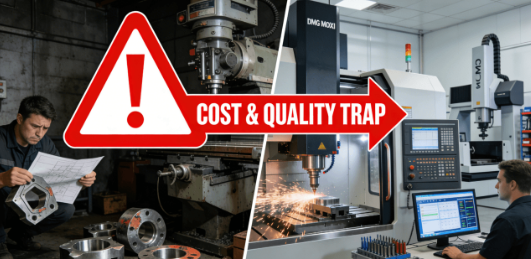
To avoid falling into cost and quality traps in CNC milling services, you should go beyond just analyzing your quote. You will need an extensive knowledge base about precision CNC milling process, an overall understanding of cost factors involved, and the choice of the manufacturing vendor having proper capabilities and processes for dealing with your orders.
Take immediate action to analyze your requirements in terms of precision machining work to be performed in the nearest future. Leverage the advantages of Online Custom Solutions service, and upload your 3D files to get an Instant Quote, or download a comprehensive guide to manufacturing optimization..
H2: Author Biography
This article was contributed by a manufacturing supply chain optimization consultant with over 15 years of experience, specializing in helping engineering teams achieve optimal cost and performance targets from design to mass production through technical sourcing and supplier management.
H2: FAQs
Q: Are online CNC machining quotes accurate and reliable?
A: Professional Instant Quote Systems powered by mature algorithms and extensive process databases can provide highly reliable budgetary quotes when fed accurate 3D models, material, and quantity data. They offer a solid, efficient basis for initial cost assessment and comparison.
Q: How can one verify if a supplier’s precision manufacturing capabilities are as advertised?
A: The key is evidence. Request specific details on core equipment precision (e.g., positioning accuracy), the types of inspection instruments available (like CMMs), and critically, examine case studies of past projects involving complex, tight-tolerance precision milling components.
Q: For low-volume R&D projects, are professional Precision Manufacturing Services too expensive?
A: Not at all. Professional Online Custom Solutions platforms excel at efficiently handling small orders through standardized digital workflows. They adeptly match projects with flexible capacity, offering cost-effective rapid prototyping and low-volume services ideal for the R&D phase.
Q: Beyond ISO 9001, what certifications are important for partnerships in the automotive or aerospace sectors?
A: The automotive industry requires IATF 16949, which deepens quality management with a focus on defect prevention. Aerospace demands AS9100-series certifications, which impose extreme requirements on product safety, reliability, and traceability. These are mandatory for supply chain entry in these sectors.
Q: When working with a remote manufacturing partner, how is communication efficiency and schedule control maintained?
A: Digital platforms are designed for this. A quality Online Custom Solutions provider offers an integrated project portal with real-time status updates (“Programming,” “In Production,” “Shipped”), document version control, issue tracking, and scheduled video conferences. This transparent, documented collaboration mode often surpasses traditional local communication in efficiency and control.